Ski Season Is Coming. My Legs Have Questions. My Mind Has More.
You can tune your skis, strengthen your legs, and buy all the latest gear. But how do you prepare for giving something everything you've got, and still failing?
Snow is usually forgiving. My ego, less so.
This winter, I'm starting my two-year journey toward CSIA Level 3 ski instructor certification, continuing to teach weekdays and weekends at Stevens Pass while training with the CSIA team at Whistler and Big White.
Apparently, my idea of fun is paying people to point out everything I'm doing wrong on skis. Brilliant business model.
First, the legs.
Every October, I rediscover that being fit and being ski fit are two entirely different things.
My preseason survival kit:
Squats, lunges, and wall sits. Your quads will eventually forgive you. Your knees will thank you.
Balance and core work. Try standing on one leg while brushing your teeth, cooking, having coffee. Flamingo impressions are optional.
Cardio and stretching. Chairlifts don't do all the work.
Gear check. Tune your skis, check your bindings, boots, and helmet. Love having a tune set-up at home.
The goal? Finish opening weekend wanting another run, not negotiating with my knees.
Now, the mind. That's trickier.
As adults, we've built careers, raised families, launched businesses, and become pretty good at knowing what we're doing.
Then someone asks you to demonstrate perfect short turns on an icy, steep slope. Suddenly, your résumé is completely irrelevant. The mountain doesn't care about your job title.
And perhaps that's exactly why I love it. When things get steep or intimidating, I use a ridiculously simple trick.
I count. One. Two. Three. Four. Five. One number per turn. It helps me focus on rhythm instead of fear, while keeping my attention on the terrain. Funny enough, it works in business too: launch the product. Grow revenue. Show profitability and high margins. All within twelve months, please. No pressure.
The temptation is to rush. But whether you're carving turns or building a company:
Slow is smooth. Smooth is fast. Focus on the fundamentals. Make the next good decision. Repeat.
But what about failure?
Here's what I'm learning: You don't train to avoid failure. You train to recover from it.
A bad run doesn't make you a bad skier. A failed assessment doesn't erase years of experience. It means you're learning.
And learning as an adult requires something we sometimes forget to practice: being comfortable not being good at something. Yet.
I'll have plenty of opportunities to practice that this winter. Some voluntary. Others courtesy of my CSIA coaches.
Five quick tips for ski season
Take a lesson. Even experienced skiers have blind spots.
Leave your ego in the parking lot. Start easy and build up.
Ski the conditions. Powder, ice, or Pacific Northwest mashed potatoes, adapt.
Hydrate, warm up, and rest. Fatigue is a terrible ski instructor.
Have fun. That's why we're out there in the first place.
One turn at a time.
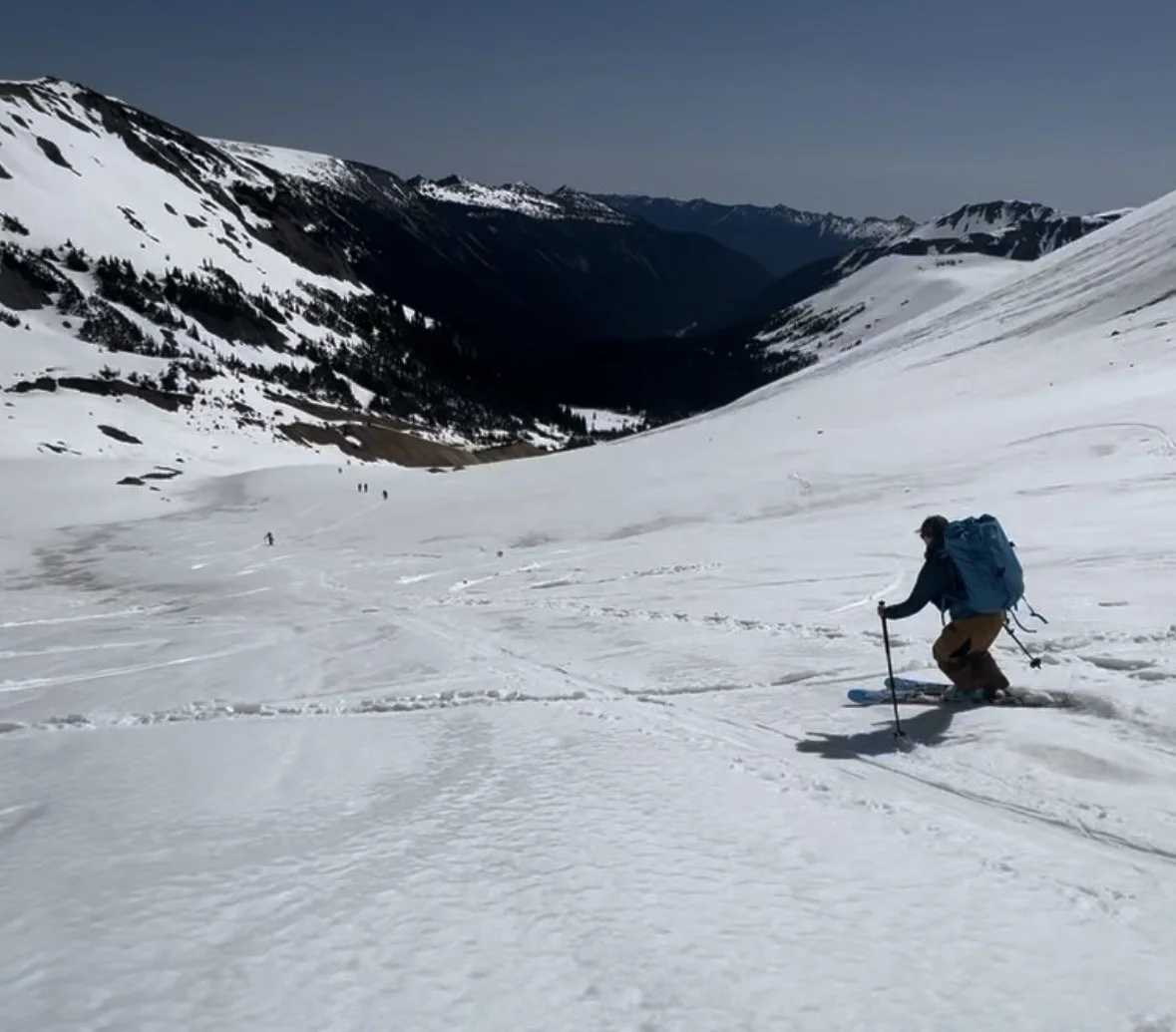
Looking at this photo of myself skiing down an enormous mountain (coming down from Schurman, Mount Rainier), what strikes me isn't the terrain behind me. It's the space ahead: one small skier with a ridiculously heavy backpack. One enormous mountain. A whole slope still to navigate. I can't see every turn I'll need to make. And I certainly don't know whether I'll pass Level 3 on my first attempt.
But I don't need to figure it all out from the top. I just need to make the next turn: One. Two. Three. Four. Five…turn
And keep going.
See you on the mountain!